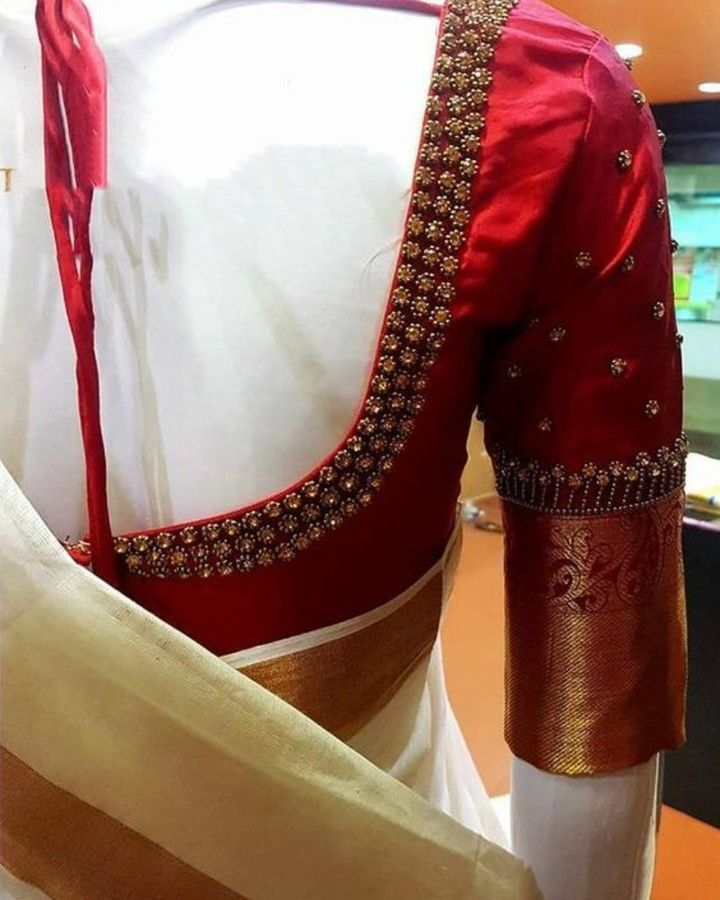
Kashmiri embroidery, which is also called Kashida embroidery, is a type of needlework from the Kashmir region of India. This is one of the most beautiful forms of Nangaya Aari Works In Chennai embroidery in the country, distinguished by its use of a single long stitch to make the design. In fact, the whole design is made with one or two embroidery stitches which are expertly executed by the embroidery craftsman.
This is what makes Kashmiri embroidery designs extremely unique. This ancient art started as a small cottage industry in the 11th century and then, over the years, became a favorite with the aristocracy and eventually, the Mughal nobility. Today, it is considered one of the most gorgeous types of embroidery in the world.
Kashmiri embroidery work is famous for the smooth, expert manner in which a single stitch is utilized to create elaborate designs. The entire design on a fabric will be created with maximum two stitches, which can be of many different types, from the chain stitch, the satin stitch, the slanted darn stitch, the herringbone stitch and the stem stitch.
The typical base of the fabric is silk, wool or cotton; wool is the most commonly used as it is commonly available in the area. The thread used is usually a fine woolen one, though nowadays other materials are used as well. Pashmina, a type of fine and light-weight wool, is the most famous export of Kashmir and Pashmina garments with Kashmiri embroidery work are the most coveted items from this region.
Kashmiri Aari Work Woolen Shawl in Red
The thread used is usually a fine woolen one, though nowadays other materials are used as well. Pashmina, a type of fine and light-weight wool, is the most famous export of Kashmir and Pashmina garments with Kashmiri embroidery work are the most coveted items from this region.
Kashmiri embroidery patterns are usually created on pastel colored backgrounds, in threads of white, beige or pale yellow. The artisans traditionally aimed at blending the thread color with the base color to create a uniquely three-dimensional effect; nowadays, however, brighter colors such as pink, blue and green are used for the base as well as the embroidery threads.
 Site Title
Leave a comment